|
|
| Past Monthly Meetings |
|
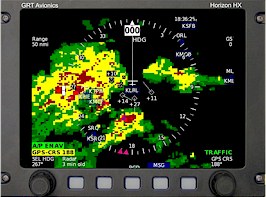
Thursday, March 13, 2014 - Kirk Kleinholz, CFII, Sales Manager, Dynon Avionics
|

Making the Transition to Glass Panel
Learn about the technology that makes electronic flight information
systems affordable and practical for small general aviation aircraft.
Understanding of the internal workings of these instruments will illustrate how they offer
reliability, affordable redundancy, and greater capability than venerable analog flight instruments.
Discussed will be the capabilities -- and limitations -- of the various consumer type devices
now offering glass panel instrument applications.
Learn not only the benefits of glass panel technology, but also the safety and training
issues relevant in making the transition from traditional analog instruments to glass panel.
|
|
|
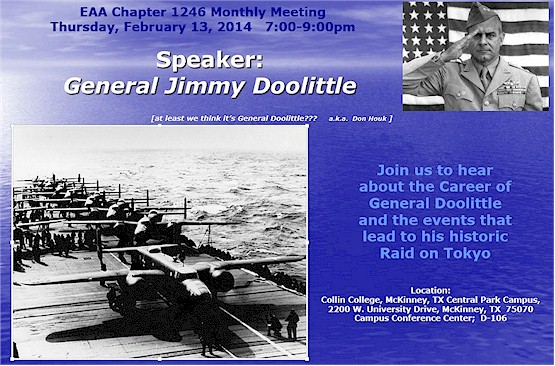
Thursday, February 13, 2014 - Jimmy Dolittle
|
|
|
|
Thursday, January 9, 2014 - Todd Curtis
|
 Where: McKinney North High School Cafeteria, 2550 Wilmeth Road, McKinney, Texas 75071
When: 7:00 to 9:00pm
Who:Todd Curtis, the Aviation Instructor for the McKinney School system will be presenting an overview or their curriculum for our chapter.
Many of their students will be graduating with a Sport Pilots License and eventually progressing the curriculum to a Private Pilot License.
Support the new aviation students and learn about their program... This is our community and who knows a special partnership could form from this meeting.
|
|
|
Thursday, November 14, 2013 - Ray Bacon
|
 Our Speaker this month will be: Ray Bacon formally with the NASA Shuttle Program. Come hear about his time with this wonderful Program.
|
|
|
Thursday, October 10, 2013 - Dave and Alina Buono - International Trip to Turks and Caicos
|
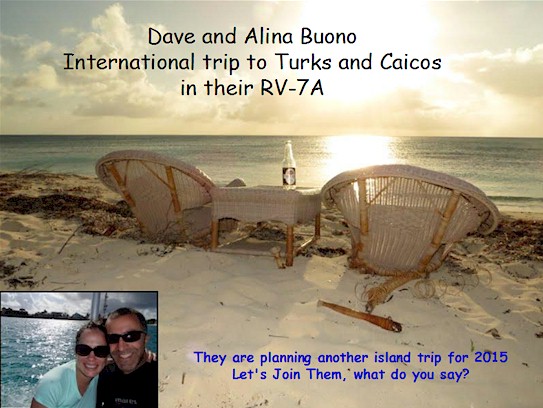 Our speaker this month is Dave and Alina Buono. International Trip to Turks and Caicos In their RV-7A.
They are planning another island trip for 2-15. Let's Join them, What do you say?
Our speaker this month is Dave and Alina Buono. International Trip to Turks and Caicos In their RV-7A.
They are planning another island trip for 2-15. Let's Join them, What do you say?
|
|
|
Thursday, September 12, 2013 - Jan Collmer - Air Show Aerobatic Performer
|
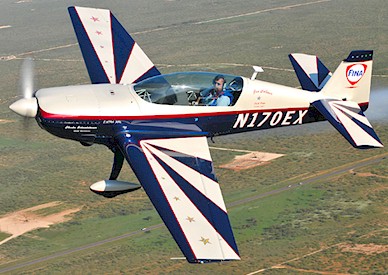 Our speaker this month is Jan Collmer - Air Show Aerobatic performer. Entrepenuer, Author,
Navy Fighter Pilot and a Founder of the Frontiers of Flight Museum.
Our speaker this month is Jan Collmer - Air Show Aerobatic performer. Entrepenuer, Author,
Navy Fighter Pilot and a Founder of the Frontiers of Flight Museum.
|
|
|
Thursday, August 8, 2013 - Grass Roots Recovery of Rockin M Airport - Walt Meziere
|
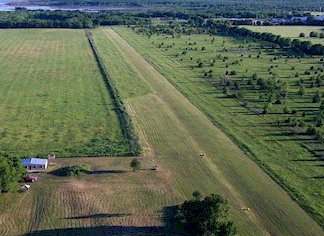 Our speaker this month is Walt Meziere, Owner and Airport Manager of the Rockin M Airport in Quinlan, TX.
He will be telling up about the 'Grass Roots Recovery of Rockin M Airport (T14) as a
Public Use Turf Strip' and about their September Flyin.
Our speaker this month is Walt Meziere, Owner and Airport Manager of the Rockin M Airport in Quinlan, TX.
He will be telling up about the 'Grass Roots Recovery of Rockin M Airport (T14) as a
Public Use Turf Strip' and about their September Flyin.
|
|
|
Thursday, July 11, 2013 - Upset Recovery - Causes, Avoidance and Recovery Techniques
|
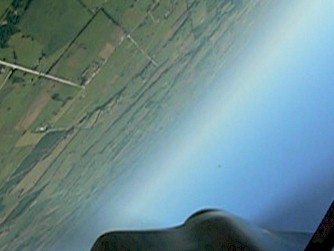 This is a very interesting program from which we will all enjoy and benefit. Richard Mandel is the speaker.
He has years of experience as a flight instructor and aerobatic instructor. Richard is a FAAST representative.
7:00-9:00pm in Conference Center Room D 106, Section A at Collin College, McKinney, TX. Central Park Campus,
2200 W. University Drive, McKinney, TX 75070
This is a very interesting program from which we will all enjoy and benefit. Richard Mandel is the speaker.
He has years of experience as a flight instructor and aerobatic instructor. Richard is a FAAST representative.
7:00-9:00pm in Conference Center Room D 106, Section A at Collin College, McKinney, TX. Central Park Campus,
2200 W. University Drive, McKinney, TX 75070
|
|
|
Thursday, June 13, 2013 - Movie Night!
|

It's Movie Night! Join us for a nice flick and Popcorn!
|
|
|
Thursday, May 9, 2013 - Mike Hance
|

Once again, Mike Hance will give his wonderful presentation about Oshkosh,
AirVenture 2013,
in Wisconsin. Mike will be celebrating his 42th visit to the event this year. Come and
experience, through his eyes, the wonders of AirVenture.
EAA AirVenture Oshkosh (formerly
The EAA Annual Convention and Fly-In) is America's largest annual gathering of aviation
enthusiasts held each summer at Wittman Regional Airport in Oshkosh, Wisconsin.
For 51 weeks a year, EAA is an
international community of more than 160,000 members that
nurtures the spirit of flight through a worldwide network of chapters, outreach programs,
and other events.
But for one week each summer, EAA members and aviation enthusiasts totaling more than
500,000 from more than 60 countries attend EAA AirVenture, where they rekindle friendships
and celebrate the past, present and future in the world of flight.
"The World's Greatest Aviation Celebration" has it all when it comes to aircraft. Warbirds. V
intage. Homebuilts. Ultralights. Some you would normally find in a hangar at your local
airport, others so unique they are the only one of its kind.
|
|
|
Thursday, April 11, 2013 - Gerry Asher - Aviation Artist
|
|
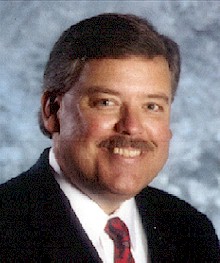
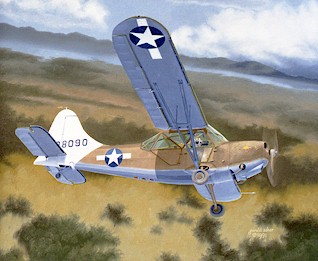
Third generation aviator and self taught artist. From a sideline
business in the US Air Force to the Air Force Art Program to
artwork that hangs in the Pentagon. Charter member and President
of the American Society of Aviation Artists.
Come share his wonderful artwork!
|
|
|
Thursday, March 14, 2013 - Gerhard Deffner - Berlin-Reykjavic-Berlin - always within gliding range of an airport
|
|
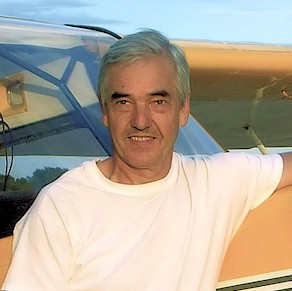
Our speaker will be McKinney's newest FAA Designee, Gerhard Deffner speaking about
"Berlin-Reykjavic-Berlin" always within gliding range of an airport.
In his presentation Gerhard will give an account of a flight from Iceland to Berlin
and use it to illustrate and discuss several topics that presented themselves in that context.
- Safe X/C flight over un-landable terrain
- Regulations and equipment for flying the North Atlantic
- Surprises - special tie downs, ATC communications, flight plans, "line up and wait"
- Approach to an airport well hidden from German pilots
- Safe & friendly sightseeing flights in Iceland
- Departure procedures and safe glide altitudes on a windy day
- The concept of "open" and "closed" airports
|
|
|
Wednesday, February 13th, 2013 - Mechanics Tour of Cavanaugh Flight Museum
|
|
This month we will be taking a Mechanics tour of Cavanaugh Flight Museum at the Addison (ADS) Airport in Addison,
Texas from 7:00 to 9:00 pm. Please note
that is a different day from our usual second Thursday meeting.
|
|
|
Thursday, January 17th, 2013 - Lori Stevens, Founder and Executive Director of Patriot PAWS Service Dogs
|
|
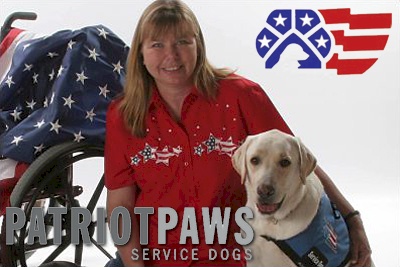
Our speaker at the EAA Chapter 1246 meeting on January 17, 2013 at 7:00pm will be Lori Stevens, Founder and Executive Director of Patriot PAWS Service Dogs. In 2005, Lori was working as a professional dog trainer when she was asked to help a group of disabled veterans by assisting them in training their dogs. After visiting the VA Hospital in Dallas, she realized the great need that many of our mobility-impaired veterans have for assistance dogs. Lori wanted to try to help them, so with only a few friends and family members on board, she started Patriot PAWS in a small storefront in Rockwall in 2006.
Lori Stevens has more than 20 years of dog-training experience, an entrepreneurial spirit and a passion for helping others. Come hear her story and show your support for this wonderful organization that aids our American veterns.
Please do not bring your dogs to this meeting (as we do at the Donut and Coffee Fly-in) as Lori well be bringing service dogs with her. Remember if the dogs are wearing their vests they are 'Working' so... Don't Feed the Bears or Pet the Dogs in Vests.
Meetings are held at 7 pm in Conference Center Room D 106, Section A at the Collin County Community College in McKinney, TX.
|
|
|
Thursday, November 8th, 2012 - Showtime!- Gray Eagles
|
|
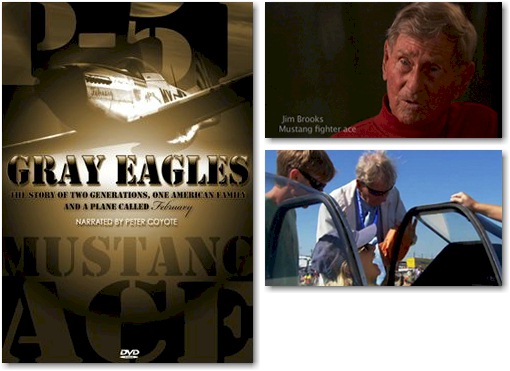
Get ready for some movie watchin' and popcorn munchin'! The new documentary, "Gray Eagles", is the
story of two generations, one American family and a plane name February.
Using thrilling, vibrant, aerial photography, "Gray Eagles" shows the reunion between a humble WWII
Mustang ace and the historic plane, that after 60 years, he never thought he'd see again. Inspired
by the flood of memories triggered by this unimaginable encounter with a long lost friend, the
88-year old pilot finally breaks his silence, sharing his stories and experiences of war with the
grandchildren who never thought they'd hear them.
Watch the Trailer!
|
|
|
Thursday, October 11th, 2012 - Jim Metz - DTC DUAT
|

|
Jim Metz, a representative of DTC DUAT in Texas and surrounding states, will be giving a presentation on DUAT, plus demonstrating how you can use this information on your mobile devices. Don't miss it!
|
|
|
Thursday, September 13th, 2012 - Duane Swing - Velocity Aircraft Inc.
|
|
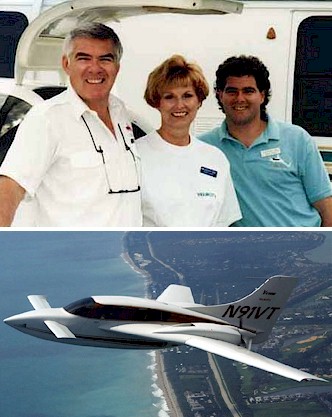
Duane Swing of Velocity Aircraft Inc., will be giving us a presentation about his company and his newest
Aircraft, the Velocity V-Twin. Don't miss it!
Duane's Bio:
- 4 years Air Force as a Russian language translator.
- 4 years Purdue University with a degree in Aviation Technology and Industrial Engineering.
- A & P license, Commercial, Instrument and Multi-Engine ratings.
- 1st aircraft (gyrocopter) built in 1962.
- 2nd rebuilt tri pacer in 1965.
- 3rd kit built Glasair finished in 1973.
- 4th kit built Q2 finished in 1979.
- 5th kit built Velocity finished in 1988.
- Owned over 40 aircraft from 1964 through 1992 including 3 single engine Comanche's, 5 twin Comanche's, two Aerostars, two Bellanca's an Aztec, a Baron, a Skymaster, and a host of other single and twin engine aircraft.
- Total flying time over 8,000 hours.
- Retired in 1992 and purchased Velocity Aircraft. Last 20 years as CEO.
ALSO:
on Saturday, September 15th, 2012 - Duane Swings Velocity V-Twin
- Duane Swing of Velocity Aircraft will be unable to display his new Velocity V-Twin at the
Collin County Regional Airport, but he will be on hand to talk about his aircraft and answer any
questions you may have. We will have coffee and donuts for everyone that attends. The meeting is at
the McKinney Hangar Owners Association(MHOA - Hangar 2515) at Collin County Regional Airport(KTKI) from 9-11 AM.
|
|
|
Thursday, August 9th, 2012 - Lt. Colonel William Perry
|
|
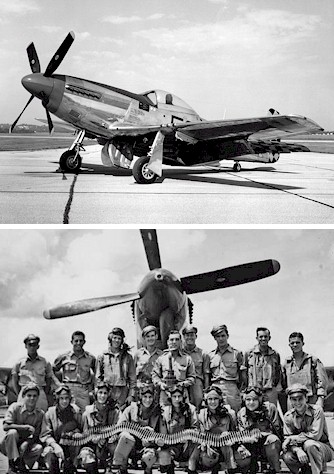
Come and hear Lt Colonel William Perry (Ret.) speak about his adventures as a pilot for 28 years,
serving our country in the armed services. Lt Colonel Perry flew a P-51 in WWII, served in Korea,
flew a C-47 in the Vietnam War. Don't miss this unique experience to hear a real war Veteran tell his story.
Biographical Info:
- September 1941 - April 1942 -- Aviation Training
- April 1942 - June 1944 -- Flight instructor--Shaw Field-SC & Walnut Ridge Field - AK
- September 1944 - April 1945 -- WWII -Reported - 8th Air Force - 66th Fighter Wing-339th Fighter Group-503rd Fighter Squadron
Fowlmere, England. Flying P-51 "PURTY", 300 Combat hours, 62 missions, 75 sorties - Awarded DFC
- 1945 - 1949 -- Assigned as Hospital Liaison Officer,Squadron C.O. T-6 Flying Instructor, Electronic Staff of Training Crop. at Scott AFB
- August 1950 - November 1951 -- Korean War - 20th Air Force Headquarters 'B-29'- 19th Bomber Group, Okinawa, Kadena AFB
- 1952 - 1962 -- Served as Staff & Command Comm. Electronic Training Center. Assigned to the Pentagon, Washington D.C.,
Room 4A 284 Communications Electronics Division.
Assigned to complete his Bachelor of Military Science degree at Maryland University.
Ordered to 3rd Air Force Ruislip, England C-F Staff Officer.
Returned to the Pentagon, Washington D.C. Room 4A 284 [same room] newly formed Defense Communications Agency.
- 1967 -- Vietnam War - Flying the C-47 (Goony Bird). Daytime - Psychological Warfare Squadron.
Night time - Dropped 2 million candle flares providing light for fighter attacks.
528:30 Combat hours - Awarded a DFC one oak leaf cluster for defending Bien Hoa Air Base
while hostile forces were massing an extensive attack.
- 1969 -- Returned to Richard Gebrur AFB, MO to the 10th A.F.HQS as a Staff Officer.
- June 30, 1970 -- Retired Lt. Colonel. Total 28 years 9 months 4 days Which includes a total of 6 years 5 days of Overseas Duty
- Awarded:
Distinguished Flying Cross - One Oak Leaf Cluster
Bronze Star Medal
Meritorious Service Medal
Air Medal -Twelve Oak Leaf Clusters
Air Commendation Medal - One Oak Leaf Cluster
Air Force Commendation Medal- One Oak Leaf Cluster
and many more...
|
|
|
Thursday, July 12th, 2012 - Aviation Weather - Wayne Fink
|
|
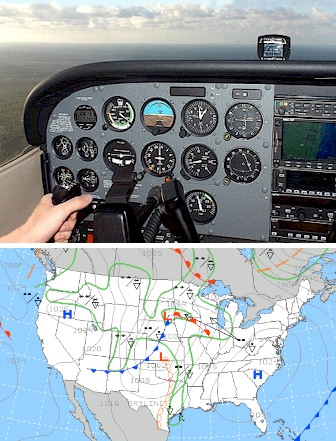
Wayne Fink, FAASTeam representative, and former Aviation Safety Counselor,
will be speaking on the topic of Convective Outlook at our next Chapter meeting.
Biographical Info:
- Commercial certificate, single and multiengine, Instrument rating,
3600 hours.
- CFI, CF-IA, and AGI certificates
Has been instructing for over 25 years
Currently specializing in IFR training, and weather
- FAASTeam representative, and former Aviation Safety Counselor.
Specializing in Weather and Airspace seminars
- Pilot for Grace Flight and Angel Flight for past 14 years
Recently retired from the Angel Flight board of directors.
- Aviation coordinator and Instructor at Collin County Community College.
- Instructor at Aviation Resource and Training Center
- Graduate of UTA with a B.S. Electrical Engineering.
- Retired from EDS in 2007.
- Owns an Electrical Service company.
|
|
|
Thursday, June 14th, 2012 - Aviation Insurance - Aaron Hatch
|
|
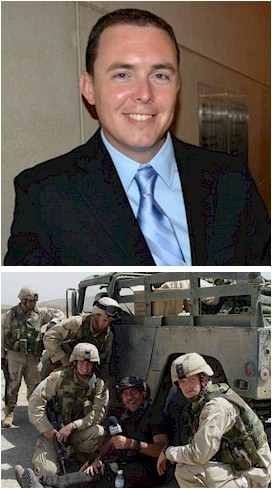
Aaron Hatch, Senior Claim Representative, Aerospace Chartis Adjustment Services, Inc.,
will be discussing the basic outline of an aviation insurance policy, coverage scenarios,
and examples of claims with photos. Open discussion about things the pilots can do to
prevent incidents from occurring.
Aaron served four years in the U.S. Army’s 82nd Airborne Infantry from 1999-2003.
After getting out of the military he became a commercial pilot (single & multi) and a
CFII, MEI. Aaron has 1800 hours with over 1000 of that giving instruction of some type.
He started adjusting property insurance claims with Safeco insurance here in Dallas
and then in Austin. He now workw for Chartis Aerospace as an Aviation Claims Representative
working strictly aviation related claims.
|
|
|
Thursday, May 10th, 2012 - Two Talks! - "Light Sport Aircraft Certification" and
"When Bad things happen to good Pilots"
|
 |
Joe Murphy will tell us all about Light Sport Aicraft Certification. Joe has a B.S. Degree
in Aviation Management, ATP, CFI, CFII, MEI, and is Typed in Citation Jets. He has been a
Chief Flight Instructor at a Major Flight school, Captain for a CFR, Part 135 Emergency
Medical Services Operation and has been in the Aviation industry for 20 years, 10 of those
years with the FAA.
Michael Zamani will give us a presentation on what to do when you get a notification
from the FAA that is not something you do not want to receive.
Michael is the FAAST Team Program Manager in the Dallas FSDO. He began flying gliders
at the age of sixteen, attended Hallmark Aero Tech in San Antonio, and received a
power plant certificate in 1982. He has a Commercial and a CFI rating in rotorcraft and
worked at Petroleum Hhelicopters and Air Logistics in Louisiana in 1987. During that time
he obtained an Inspection Authorization (IA) rating and a FCC license.
He has a Degree in Business Administration and a Master's business administration and finance.
He worked as a FAA airworthiness inspector for five years.
|
|
|
Thursday, April 12th, 2012 - Bill Moffitt - ADS-B - What's it all about
|
|
Bill Moffitt, who is the President of NavWorx, will be giving us a presentation about ADS-B. Bill is a
private pilot with over 700 hours, and has an IFR rating. He also rated for gliders and gyroplanes.
Here is his presentation lineup:
- ADS-B - what's it all about
- Who benefits from ADS-B
- Minimum equipment for the mandate
- Optional equipment every pilot should have
- Does it work today?
- Product offerings from NavWorx
|
Wait there's more! - David L. Roesch, ATM, McKinney ATCT
|
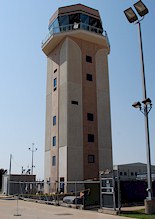 David will give us a talk about the new runway project with its displaced thresholds, Navaids and
replacement runway configuration. Also, he has planned a Runway Safety Action Team (RSAT) meeting
for Thursday, June 7th (time and place to be announced) that he will also give us more information about.
David will give us a talk about the new runway project with its displaced thresholds, Navaids and
replacement runway configuration. Also, he has planned a Runway Safety Action Team (RSAT) meeting
for Thursday, June 7th (time and place to be announced) that he will also give us more information about.
|
|
|
Thursday, Thursday, March 8th, 2012 - Jim Wilson - Aerial Photography!
|
|
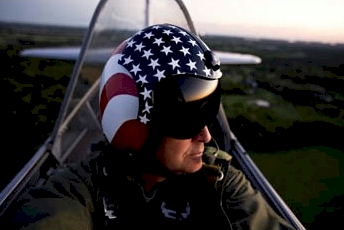
Jim is a commercial photographer based in the DFW Metroplex.
His work spans many markets including aviation, corporate assignments,
commercial/residential architecture and advertising.
|
|
|
Thursday, February 9th, 2012 - SHOWTIME! - Flying the P-51 Mustang
|
|
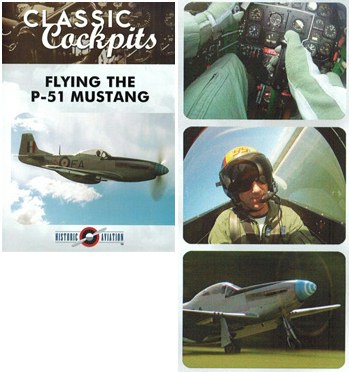
This month it's SHOWTIME! We will be showing a documentary on flying the P-51 Mustang,
PLUS Bill Perry, a WWII P-51 Pilot, who flew escort for the bombing runs in Europe, will
give a talk about his adventures.
In 1944, as the Allied daylight bombing offensive moved further eastward, the North American
P-51 Mustang provided much-needed air superiority as it escorted bombers all the way to
Germany and home again. Now, you can step into the cockpit of a P-51D - the Mustang
definitive version - to experience the thrill of flight just like a World War II fighter pilot.
Filmed in color with multiple, high-definition on-board cameras, this thrilling program takes
you for a complete flight - from engine start to shutdown - using the same drills P-51 pilots
used in World War II. You'll also enjoy spectacular air-to-air footage of your flight, listen
in to the chatter on the intercom, and even accompany the crew chief and pilot as they perform
the pre-flight checks and walk around!
|
|
|
Thursday, January 12th, 2012 - Flying Choppers in Vietnam - Ken Wiegand
|

|
This month Ken Wiegand, Executive Director of the Collin County Regional
Airport, McKinney, TX, is going to give us a presentation about flying
"Choppers" in Vietnam. Ken served in the US Army for 20 years as an
officer and Army Aviator and completed two combat tours in the former
Republic of Vietnam. He flew UH-1D troop carriers and UH-1C gunships
and was give the call sign Firebird 95 when he earned the designation
Aircraft Commander and fire team leader. During his second tour he
flew UH-1H troop carriers. He flew a total of 3,350 hours and received
45 Air Medals, the highest being the Legion of Merit, awarded by the
Adjutant General of the Army.
Ken is an accredited member of the American Association of Airport
Executives, holds a commercial pilot’s license in helicopter and
fixed wing aircraft, and earned a Master’s degree in Business
Administration from Embry-Riddle Aeronautical University.
|
|
|
Thursday, November 10th, 2011 - Lucky Louque - Air Salvage of Dallas
|
|
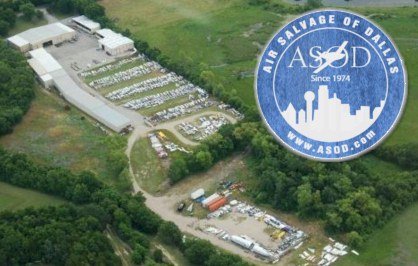
This month Lucky Louque of Air Salvage of Dallas will give us a
presentation on preventing aircraft accidents. Air Salvage of Dallas has
a large inventory of used parts, components engines, props, instruments
and avionics for most General Aviation Aircraft. They feature trained
staff just waiting to serve you. Including an A&P, DAR, and IA with more
than 40 years of experience on all types of aircraft.
|
|
|
Thursday, October 13th, 2011 - Cavanaugh Flight Museum Presentation
|

|
This month Cavanuagh Flight Museum will give a presentation about their facility
and all the great things they have in store those aviation enthusiasts who wish to visit there.
The Cavanaugh Flight Museum is a non-profit 501(c)(3) educational organization
devoted to promoting aviation studies and to perpetuating America's aviation
heritage; the museum fulfills its mission by restoring, operating, maintaining
and displaying historically-significant, vintage aircraft, and by collecting
materials related to the history of aviation.
|
|
|
Thursday, September 8th, 2011 - The Restorers - Showtime!
|
|
Many antique aircraft perform at today s airshows and races worldwide.
How did those aircraft get there? How did they survive all these years?
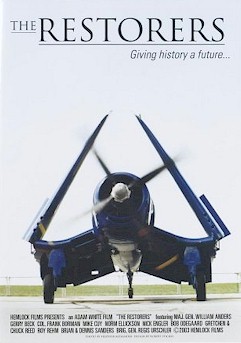
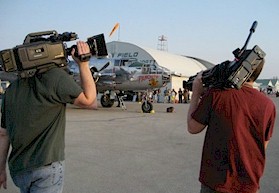
The Restorers is an hour-long documentary film about warbird and vintage
aircraft restorers and the planes they resurrect from the graves of history.
Their works often haven't flown in over 50 years and are in the worst of conditions.
These individuals are similar to classic car enthusiasts. Their obsession,
however, is deeper and obscenely more expensive. Our story will examine the
spectrum of restorers - from the everyday guy who is rebuilding a biplane
in his garage, to the corporation that specializes in warbird reconstruction.
|
|
|
Thursday, August 11th, 2011 - Presentation on the Shell Oil/Doolittle Stinson Reliant (NC21104) - Tom and Jeff Ferraro
|
|
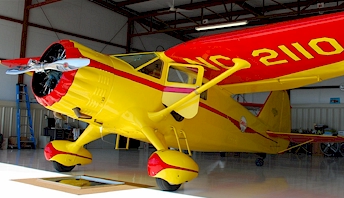
Tom and Jeff Ferraro, the new owners of the 1938 Stinson SR-10 "Gullwing" Reliant,
will be giving a presentation on the aircraft and it's history.
This rare and classic airplane is flying aviation history and is one of the best
restored, most memorable airplanes in the world today.
The Reliant that was built for Jimmy Doolittle and was his personal 'company plane'
in the late 1930's. It was fully restored down to the last detail and has been a
show-stopper at every event is has attended.
|
|
|
Thursday, July 14th, 2011 - AirVenture 2011 - Mike Hance
|
|
Once again, Mike Hance will give his wonderful presentation about Oshkosh, AirVenture 2011,
in Wisconsin. Mike will be celebrating his 40th visit to the event this year. Come and
experience, through his eyes, the wonders of AirVenture.
EAA AirVenture Oshkosh (formerly
The EAA Annual Convention and Fly-In) is America's largest annual gathering of aviation
enthusiasts held each summer at Wittman Regional Airport in Oshkosh, Wisconsin.
For 51 weeks a year, EAA is an
international community of more than 160,000 members that
nurtures the spirit of flight through a worldwide network of chapters, outreach programs,
and other events.
But for one week each summer, EAA members and aviation enthusiasts totaling more than
500,000 from more than 60 countries attend EAA AirVenture, where they rekindle friendships
and celebrate the past, present and future in the world of flight.
"The World's Greatest Aviation Celebration" has it all when it comes to aircraft. Warbirds. V
intage. Homebuilts. Ultralights. Some you would normally find in a hangar at your local
airport, others so unique they are the only one of its kind.
|
|
|
Thursday, June 9th, 2011 - Future Airport Plans - Ken Wiegand
|
|
|
Ken Wiegand, Executive Director of the Collin County Regional Airport, will give a
presentation about what’s in store for Collin County Regional Airport. Ken has been
executive director of the Collin County Regional Airport since 2002. Ken is an
accredited member of the American Association of Airport Executives, holds a
commercial pilot’s license in helicopter and fixed wing aircraft, and earned a
Master’s degree in Business Administration from Embry-Riddle Aeronautical University.
|
|
|
Thursday, May 12th, 2011 - Sport Air Racing - Chester Jurskis
|
|
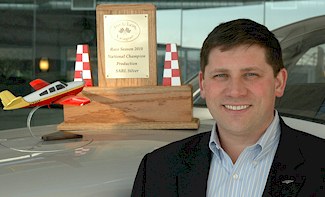
Racing For The Rest Of Us!!
The Sport Air Racing League exists to promote open course air racing for experimental
and production aircraft.
Air Racing is currently dominated by the National Air Races at Reno. Attempts have been
made to create a series of races across the country – Phoenix in 1994 and 1995, Tunica in 2005 – without success.
With the increasing proliferation of high performance experimental aircraft, there existed a need for a racing
league for pilot/owners who do not have the deep pockets necessary to race at Reno, even in the Sport Class.
|
|
|
Thursday, April 14th, 2011 - Getting Your Airplane Painted
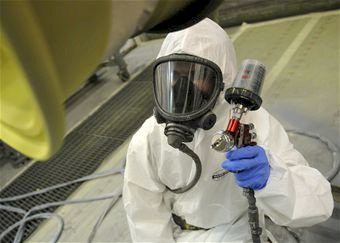 Frank Waggoner will speak to us about his business of restoring classic cars, motorcycles, and his unique techniques painting aircraft. He will explain the process and the importance of preparation, before paint is ever applied. Frank enjoys the challenge of requests for unusual paint schemes and modifications. He does all of his own work and has years of experience practicing his craft. He works at Aero Country in West McKinney.
ALSO...
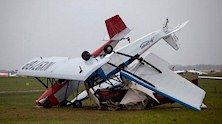
Our own Tom Moore attended Sun n’ Fun in Florida and weathered the storm that ravaged the event. He will give a short talk about his adventures there, plus show his photos of the damaged aircraft from the carnage.
We also have actual video footage of the storm as it first hit.
|
|
Thursday, March 10th, 2011 - Risk Management and the Redbird FMX 1000 Advanced Training Device
 Ray Heyde, President & Founder the Aviation Training & Resource Center's (ATRC) in
Carrollton, TX, is going to give us a talk on Risk Management and the Redbird FMX 1000 Advanced Training Device.
Ray Heyde, President & Founder the Aviation Training & Resource Center's (ATRC) in
Carrollton, TX, is going to give us a talk on Risk Management and the Redbird FMX 1000 Advanced Training Device.
Here's what Ray has to say about the Redbird FMX 1000. "With all of its capabilites,
the FMX is truly worthy of the FAA Approval status as an "Advanced Aviation Training
Device" (AATD). The model of aircraft represented can literally be changed from one
model to another in just a couple of minutes. This advancement is huge for students
since it allows them to fly a product like they are using in the real aircraft.
In addition, we can blend the old steam gauge six pack technology of many training
aircraft to the "glass cockpit" of the future."
|
|
Thursday, February 10th, 2011 - Homebuilt Aircraft Final Inspection - What a DAR is looking for
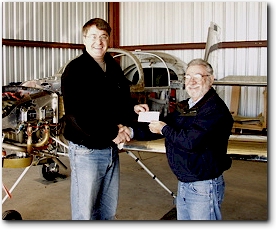 Is your Experimental Aircraft almost ready for it's final inspection? Are you ready?
Join us for our Monthly EAA Chapter meeting where Mel Asberry, an award winning DAR,
goes through the inspection process and details what's involved in getting that approval slip.
Is your Experimental Aircraft almost ready for it's final inspection? Are you ready?
Join us for our Monthly EAA Chapter meeting where Mel Asberry, an award winning DAR,
goes through the inspection process and details what's involved in getting that approval slip.
Mel is the 2005 recipient of EAA's Tony Bingelis Award. He has volunteered as an EAA Technical
Counselor since 1986, advising aircraft builders on safe completion of their projects.
He became an EAA Flight Advisor in 1994, helping local pilots assess their flying skills to be
able to safely fly their newly built or restored aircraft. Mr. Asberry has also written
several articles for the benefit of the aviation community. He has written nine programs and
37 technical articles for his chapter newsletter. He has also written two chapter programs
for other chapters. He has also presented a number of forums at the Southwest EAA Regional
Fly-In, an event co-founded by Tony Bingelis.
Mel continues to educate and guide aircraft builders through numerous presentations in Texas,
as well as forums during EAA AirVenture Oshkosh. He has constructed two ultralights and one
motorglider, as well as an RV-6 aircraft that has won numerous awards. In 1993 he won the
Southwest Regional Fly-In Kit Built Custom Workmanship Award, while in 1994 he won the Best
All-Metal Homebuilt Airplane award at the Sun 'n Fun Fly-In at Lakeland, Florida, as well as
the Grand Champion Kit-Built award at the All-American Sport Aviation Fly-In. In 1995, he won
Homebuilt Outstanding Aircraft at Sun 'n Fun.
|
|
Thursday, January 13th, 2011 - FAAST Safety Team Special Presentation
We are happy to have Joe Murphy and Michael Zamani from the Federal Aviation Administration Safety Team (FAAST).
Joe will give a Powerpoint presentation on what the FAAST Team is all about, PLUS a discussion on the upcoming Temporary Flight Restriction (TFR) for the Super Bowl. He is the FAASTeam Program Manager for the FAA. Joe has a Bachelor of Science Degree in Aviation Management. Joe’s certifications include ATP, CFI, CFII, MEI and has over 10, 000 flight hours. His past work experience includes being the Chief Flight Instructor of a National Flight school, and serving as a Captain for a CFR part 135 Emergency Medical Service operation. He has over 20 years in the aviation industry.
Michael will give a talk on maintenance tips for aircraft owners and operators. His certifications include A&P, IA, FCC and Commercial CFI Rotorcraft . He holds a Bachelor of Science Degree in Business and a Masters in Business Administration. He has worked in the aviation industry for 25 years; 3.5 years with the FAA, 7.5 years for the Air Logistics helicopter company and 14 years with Petroleum helicopters.
|
|
Thursday, November 11th, 2010 - Butch Smith's Around-the-World Flight
 We are fortunate to have a great speaker lined up for our EAA Chapter 1246 monthly meeting. Butch Smith will be talking to us about his recent flight around-the-world in his King Air. Come and hear Butch tell us about this once in a lifetime adventure! Between all of the pictures and Butch’s ability to tell a story, this will be the next best thing to being there. The November meeting will be held on November 11th in Conference Room D106A at 7PM at the Collin County Community College. This one is not to be missed!
|
|
Thursday, April 8th 2010 - Dave Roesch, Collin County Regional Airport Tower
 Dave, from the Tower will be the speaker at our next EAA Chapter Meeting. Dave Roesch (pronounced Rush),
has been married to his lovely wife Jan for 33 years, he has three children, five grandkids, and has been in Air
Traffic Control since 1976. His first 20 years were in the US Navy (most of that time on the west coast). Dave served
on 2 Aircraft Carriers, 1 "gator freighter", and 4 Naval Air Stations. He has been in McKinney for the Last 13 ½ years
at the Collin County Regional Airport. Most, but not all, of this time has been as Air Traffic Manager. Dave will
sharing his thoughts and views on the following topics:
Dave, from the Tower will be the speaker at our next EAA Chapter Meeting. Dave Roesch (pronounced Rush),
has been married to his lovely wife Jan for 33 years, he has three children, five grandkids, and has been in Air
Traffic Control since 1976. His first 20 years were in the US Navy (most of that time on the west coast). Dave served
on 2 Aircraft Carriers, 1 "gator freighter", and 4 Naval Air Stations. He has been in McKinney for the Last 13 ½ years
at the Collin County Regional Airport. Most, but not all, of this time has been as Air Traffic Manager. Dave will
sharing his thoughts and views on the following topics:
1. Operations/Aircraft activity (and the trends)
2. Update of the new control tower (and how it will affect flight ops)
3. Required "readback" information (from the pilot, to the controller)
4. Saying "have the numbers" verses saying have the ASOS, one minute weather, the ATIS, etc…
|
|
Thursday, March 11th 2010 - The Longest Cross-country
 Michael Combs is a plugged-in pilot. After each flight, he posts an update on Twitter and his blog.
While in flight, he uses a satellite-tracking device to let his followers know where he is at all times.
Michael Combs is a plugged-in pilot. After each flight, he posts an update on Twitter and his blog.
While in flight, he uses a satellite-tracking device to let his followers know where he is at all times.
In most respects, Combs is no different than many of today’s high-tech aviators. In one respect, however, he stands out.
In April, Combs will launch on an ambitious 50-state tour of the United States in a Remos GX light sport aircraft.
He’s calling it The Flight for the Human Spirit, and for Combs, it is the ultimate expression of a personal philosophy: to live life with no regrets.
A new airplane and a dream
Combs, a 50-something personal coach who lives in Denton, Texas, flew a brand-new Remos GX from his home to Tampa, Florida, for AOPA’s
Aviation Summit. At Summit, AOPA unveiled its 2010 Fun to Fly Sweepstakes airplane—which is the same model of Remos.
It was November 2009; just a few weeks earlier, he’d passed his sport pilot checkride. The nine-hour cross-country was
the longest he’d made. He had about 60 hours in his logbook and wasn’t sure he’d reach triple digits by April 4, 2010.
|
|
Thursday, February 18th, 2010 - Let's talk Aircraft Engines!
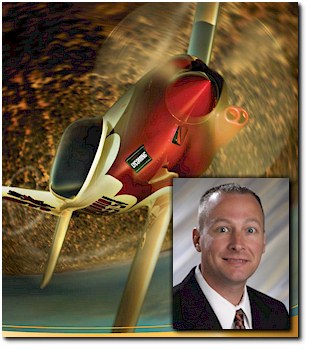 This months presentation is being brought to us by Jeff Schans, who is the Thunderbolt Manager for
Lycoming Engines. Jeff is a seasoned aviation professional who has put his knowledge and experience to work helping
Lycoming Thunderbolt customers design high-performance custom engine solutions.
This months presentation is being brought to us by Jeff Schans, who is the Thunderbolt Manager for
Lycoming Engines. Jeff is a seasoned aviation professional who has put his knowledge and experience to work helping
Lycoming Thunderbolt customers design high-performance custom engine solutions.
A commercial pilot with a
multi-engine rating, Jeff began his aviation career in the United States Marines as a C-130 Power
Plant Mechanic. He went on to earn a degree in Aviation Maintenance Technology. He is an FAA certified air frame
and power plant mechanic who holds an inspection authorization.
Jeff joined Lycoming in 2006 as a field service
engineer, providing technical support and guidance to Lycoming's global customer base. In 2008, he was chosen
Thunderbolt manager with responsibilities for worldwide Thunderbolt sales and customer support.
For more information about Thunderbolt Engines, go to www.MyTBolt.com
or click here to download the Thunderbolt flyer.
Note to Chapter Members! This months EAA Chapter meeting is on February 18th, 2010, which is on the third
thursday of the month, rather than our usual second thursday of the month.
|
|
Thursday, January 14th, 2010 - You built it. It’s done. Now it’s time for the maiden voyage!
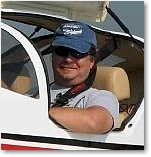 For our next meeting Dave Wilson will lead a discussion on making the first flight in a homebuilt aircraft.
You built it. It's done. Now it's time for the maiden voyage! Are you ready? What should you do? Dave will lead a
discussion on making the first flight in a homebuilt aircraft.
He will share his experience in making the first flight in the Glasair that he and his wife built over the
course of 13 years. Dave will also talk about the resources available from the EAA and the FAA and solicit
membership feedback to share best practices.
|
|
| November 12th, 2009 - Movie Night! — Barnstorming |
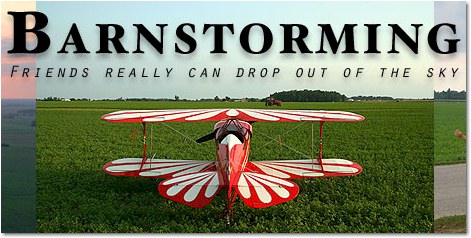 Join us for Movie Night! We will be showing a great film documentary named
Barnstorming.
Join us for Movie Night! We will be showing a great film documentary named
Barnstorming.
The film immerses the viewer in the adventure, giving them the perspective of a participant. It follows the pilots and the Dirksens as they prepare for the most exciting day of the year. The pilots gather from around the country before flying to the farm, while the Dirksens turn their alfalfa field into an airstrip and prepare a picnic for 200 friends. The film unfolds with ever-increasing anticipation, leading to the annual reunion.
The spirit of the film mirrors the spirit of the event itself. As a story of ordinary people who share one extraordinary day a year, the film is a pastoral portrait of the rural American Midwest, the lyrical life of antique airplane pilots, the breathtaking beauty of flight itself, and a celebration of friendship. Its characters are architects, dairy farmers, consultants, jet pilots, parents, school children and laborers every day of the year but one. On the day the planes come, they are all kids again.
|
|
| October 8th, 2009 - The Aircraft Partnership Association — Creating Partnerships that Fly |
 David Kruger is going to speak to us about aircraft partnerships and his new organization
www.theAPA.com.
David Kruger is going to speak to us about aircraft partnerships and his new organization
www.theAPA.com.
The APA's Virtual Pilot Lounge™ is a secure web-based solution where interested parties can post a detailed profile and
then search for and be found by other members interested in aircraft co-ownership. You can conduct searches for suitable
co-owners based on location, budget, flying experience, aircraft of interest and much more. To learn more about the APA,
download this document entitled You Really Can Afford An Aircraft.
|
|
| September 10th, 2009- LSA, ELSA, SLSA, & SP, What does it all mean? by Mel Asberry |
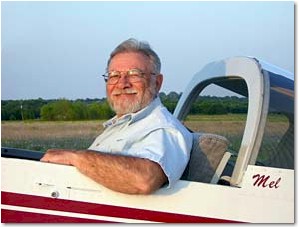 During this presentation we will try to clear up some of the confusion. Bring your questions to the EAA 1246 Meeting on Thursday September 10th. Audience participation is encouraged.
As one of the first DARs appointed to certificate both Special and Experimental Light-Sport aircraft, I've seen most all of them including imports, powered parachutes, weight-shift control, Cub replicas, and even weight-shift seaplanes.
During this presentation we will try to clear up some of the confusion. Bring your questions to the EAA 1246 Meeting on Thursday September 10th. Audience participation is encouraged.
As one of the first DARs appointed to certificate both Special and Experimental Light-Sport aircraft, I've seen most all of them including imports, powered parachutes, weight-shift control, Cub replicas, and even weight-shift seaplanes.
Mel is the 2005 recipient of EAA's Tony Bingelis Award.
He has volunteered as an EAA Technical Counselor since 1986, advising aircraft builders
on safe completion of their projects. He became an EAA Flight Advisor in 1994,
helping local pilots assess their flying skills to be able to safely fly their newly built or
restored aircraft. Mr. Asberry has also written several articles for the benefit of the aviation community. He has written nine
programs and 37 technical articles for his chapter newsletter. He has also written two chapter
programs for other chapters. He has also presented a number of forums at the Southwest
EAA Regional Fly-In, an event co-founded by Tony Bingelis.
Mel continues to educate and guide aircraft builders through numerous presentations in Texas,
as well as forums during EAA AirVenture Oshkosh. He has constructed two ultralights and one
motorglider, as well as an RV-6 aircraft that has won numerous awards. In 1993 he won the
Southwest Regional Fly-In Kit Built Custom Workmanship Award, while in 1994 he won
the Best All-Metal Homebuilt Airplane award at the Sun 'n Fun Fly-In at Lakeland,
Florida, as well as the Grand Champion Kit-Built award at the All-American Sport Aviation Fly-In.
In 1995, he won Homebuilt Outstanding Aircraft at Sun 'n Fun.
|
|
| March 12th, 2009- Coming Soon to a Garage Near You! by Vernon Porter, Ph.D. |
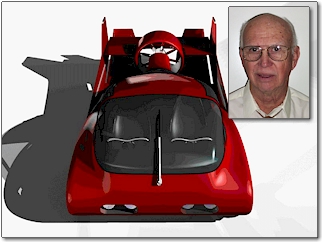 Dr. Porter will be presenting a short summary of flying cars, past, present and imaginary.
The principles of design and guiding forces that shape the construction of their vehicle,
the Chaparral, will be discussed. Some events from the 3 years - from models to test- will be
highlighted. Current status and progress will be augmented by photos from the shop.
Dr. Porter will be presenting a short summary of flying cars, past, present and imaginary.
The principles of design and guiding forces that shape the construction of their vehicle,
the Chaparral, will be discussed. Some events from the 3 years - from models to test- will be
highlighted. Current status and progress will be augmented by photos from the shop.
Inventor, entrepreneur, scientist. Dr. Porter has a technical background with over 40 years
of R & D experience. This was primarily at Texas Instruments, but various other companies
have benefited from his consulting : Alcatel, Keeblers, and many others. His patented
inventions are extremely varied and include a "photonic bullet", Oil Well drilling Fluid,
Laser Photolithographic Writer, Microwave chemical sensor, etc. Currently he takes
assignments as an industrial forensic investigator and expert witness. His main project
is the completion of the flying car.
|
|
| February 12th, 2009- L-3 ATC Training |
 This month’s speaker will
be Jim Christy. He will be
joined by Mark Blackburn.
They are both from L-3’s Lin k
Simulation and Training Division.
Mark is the Tower Manager
at the new tower at Grayson
County Airport and Jim is
with the new ATC training facility
at GYI. They will talk about
the mission of the tower and the
new school. It should be very
interesting if you have ever wondered
where new controllers
come from or what it takes to
become a controller.
This month’s speaker will
be Jim Christy. He will be
joined by Mark Blackburn.
They are both from L-3’s Lin k
Simulation and Training Division.
Mark is the Tower Manager
at the new tower at Grayson
County Airport and Jim is
with the new ATC training facility
at GYI. They will talk about
the mission of the tower and the
new school. It should be very
interesting if you have ever wondered
where new controllers
come from or what it takes to
become a controller.
|
|
| January 15th, 2008 - Aviation Photography by Jim Wilson |
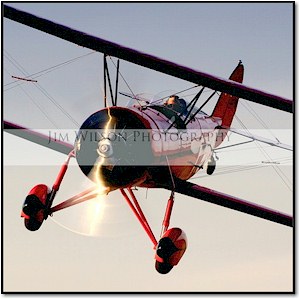 Jim Wilson is well-known in the aviation community as one of the best
photographers in the business. He has an extensive portfolio of
incredible aviation photography and will be at our January meeting
to share his best examples of marvelous airplanes, along with
fascinating stories about them. Come and enjoy the spectacular
views captured by Jim with his high-resolution cameras.
Jim Wilson is well-known in the aviation community as one of the best
photographers in the business. He has an extensive portfolio of
incredible aviation photography and will be at our January meeting
to share his best examples of marvelous airplanes, along with
fascinating stories about them. Come and enjoy the spectacular
views captured by Jim with his high-resolution cameras.
Jim shares our love of aviation and flying. He has built his own
experimental Firebolt biplane and regularly flies one of several
airplanes out of Collin County Regional Airport, McKinney, TX.
As a professional photographer, Jim has been invited to photograph
many airshows and fly-ins and has been able to explore a huge
variety of beautiful and interesting airplanes, both on the ground and in the air.
This will be a feast for the eyes. You should not miss it.
SPECIAL NOTE: This months regular meeting date of January 8th was cancelled
due to construction at the Collin County Community College. Be sure and tell all of your
fellow EAA Chapter friends.
|
|
| November 13, 2008 - Oscar. R. (Butch) Smith, Jr. |
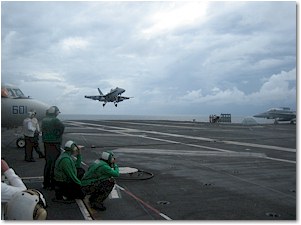 Butch Smith is our speaker at the November meeting. He will be talking about his exciting visit to the
aircraft carrier, USS Dwight D. Eisenhower.
Butch Smith is our speaker at the November meeting. He will be talking about his exciting visit to the
aircraft carrier, USS Dwight D. Eisenhower.
Butch, the son of a retired Air Force Master Sergeant, is a native of Orange, Texas; however, he grew
up on Air Force bases around the U.S, as well as Japan. He attended Lamar University in Beaumont,
Texas, and graduated in 1975 at age 20 with a Bachelor of Arts Degree in just three years of study.
Butch was a member of the Air Force Reserve Officer Training Corp (AFROTC) at Lamar and was Cadet
Corps Commander his senior year. He was commissioned as a Second Lieutenant in the United States Air
Force Reserve upon graduation.
For over 25 years the Smiths have made their home in Plano, Texas. Butch has been active in the
community with many organizations including Grace Flight of America/Angel Flight South Central,
where he is a volunteer pilot and Chairman of the Board, Boy Scouts, where he was an adult leader
and coaching youth sports to name just three interests. As a long time pilot, Butch has thousands
of hours as pilot-in-command on aircraft as diverse as corporate jets and rag-wing tail draggers.
He has served as a member of the Plano Economic Advisory Board and is currently a member of the
Board of Advisors, College of Business, Lamar University and is Chairman of the Marketplace
Ministries Foundation Board.
|
|
| October 9, 2008 - Our Flying Heritage |
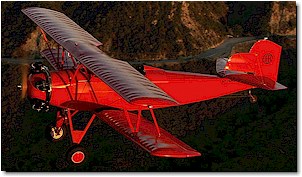 "When once you have tasted flight, you will forever walk the Earth with your eyes turned skyward,
for there you have been, and there you will always long to return." - Leonardo DiVinci
"When once you have tasted flight, you will forever walk the Earth with your eyes turned skyward,
for there you have been, and there you will always long to return." - Leonardo DiVinci
We are truly blessed to live in an age and place where we can get in our personal airplane and go
almost anywhere at a time of our choosing. We can experience the sheer joy of flying. But we
must be vigilant to keep this freedom. This month, we will explore what flying is all about
and how our predecessors made it possible. Prepare to be inspired! Learn the secrets to keeping the dream alive.
|
|
| September 11, 2008 - Aircraft Painting, by Ken Morris |
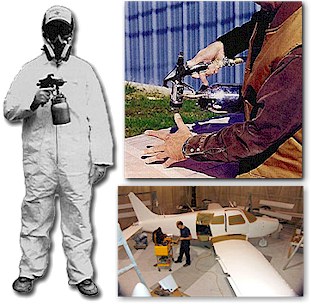 If you are building an experimental airplane, or if you already have an airplane, you may have wondered what is involved in painting, or re-painting, your magic carpet. Some even dare to do the job themselves, such as our guest speaker for the September meeting - Ken Morris. He recently completed his RV-7A and decided to personally tackle the final job - painting. According to Ken, the actual process of painting is not that difficult. The key is in preparing the surface; that is where all the time and work is involved. You cannot have a good paint job if the preparation phase is inadequate.
Come to our meeting and learn the secrets of painting an airplane. Once you hear from Ken about how he accomplished this all important task, you may decide that you, too, can paint your own airplane. Even if you hire someone else to do the work, there is a lot you can (and should) do to get the plane ready before it is painted. These are things you should know about.
|
|
| August 14, 2008 - Insurance for Your Airplane |
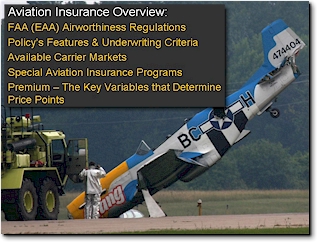 If you fly, your airplane should be insured. Have you ever wondered what the insurance company considers when insuring your airplane and how they set the premium? Our guest speaker for this month will tell you what you need to know when it comes to aviation insurance. The cost and requirements can vary widely from company to company. Your experience and the type of airplane can drastically affect the coverage available. Be sure to attend this meeting and get the inside story.
W.B. McDonald is the Managing Director for M7…A Commercial Insurance Brokerage Firm. Mr. McDonald holds a Bachelor's degree in Sociology and Psychology from La. Tech University and has made his home in Plano, Texas over the past 12 plus years.
|
|
| July 10, 2008 - Doug Jeanes, Cavanaugh Flight Museum |
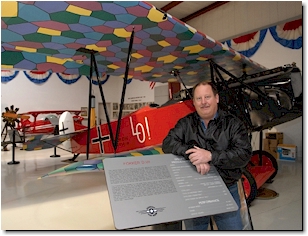 Our speaker for July is Doug Jeanes, Director of the Cavanaugh Flight Museum. He loves to fly warbirds and has been flying since 1975. The high point of his career? Flying in Martin Scorsese's movie The Aviator (2004), starring Leonardo DiCaprio. The low point? A near-death experience when a P-47 he was flying caught fire and crashed.
Doug launched a career in aviation when he was about 19 or 20. He began going to air shows and restoring airplanes as a hobby. Fourteen years ago, he turned that hobby into a career. He joined the Cavanaugh Flight Museum as director of maintenance and then was promoted to director nine years ago.
Doug has seen the Cavanaugh Flight Museum grow from 18 planes to 42 planes and five hangars. In fact, the museum has grown so much Doug and the Town of Addison are in the planning stages to build a new facility. *
*Source, Plano Profile - March 2008
|
|
| June 12, 2008 - Flying Clubs |
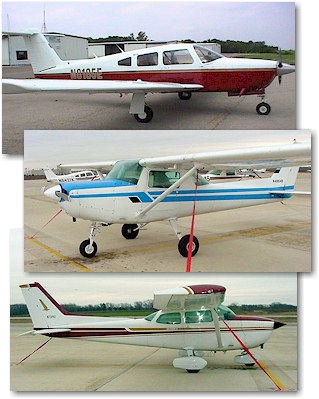 What is the most economical way to learn to fly? How can you have access to several airplanes without the costs and
headaches of ownership? How do you find and associate with other pilots who share your love of aviation?
The answer is: Join a Flying Club. Even pilots who already have their own airplane may find advantages in belonging to a flying club.
What is the most economical way to learn to fly? How can you have access to several airplanes without the costs and
headaches of ownership? How do you find and associate with other pilots who share your love of aviation?
The answer is: Join a Flying Club. Even pilots who already have their own airplane may find advantages in belonging to a flying club.
If you own a fast, expensive airplane that is great for cross-country trips, you may prefer to fly the inexpensive club
airplane for local sightseeing, pattern work, or that weekly trip to a nearby airport for lunch. If your plane is down
for maintenance, you might like to have a backup in the club planes, so that you can still take that planned, family trip.
As a flying club member, you can gain proficiency and get time in several different airplanes, so that you are a more
versatile pilot. If you are interested in getting an instrument rating and your own plane is not fully equipped, you can
use the club planes and instructors for your training.
Garry Ackerman is a founding member of the North Texas Flying Club of McKinney. He will tell us about the North Texas
Flying Club and provide insight on how belonging to it may benefit you. You will learn more about how membership in a
flying club is one of the best ways to increase your pilot skills and lower the cost of flying. Remember that our next
meeting is upstairs in Room A217, rather than the usual Pike Hall.
|
|
| May 8, 2008 - Avionics for your Airplane |
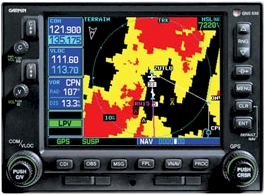 Greg White and Jerry Huntley from Select Avionics will
tell us about the latest and greatest avionics for our production and kitbuilt aircraft. Get your questions answered
regarding the pros and cons of various types of electronic gear.
Greg White and Jerry Huntley from Select Avionics will
tell us about the latest and greatest avionics for our production and kitbuilt aircraft. Get your questions answered
regarding the pros and cons of various types of electronic gear.
|
|
| April 10, 2008 - Runway Incursions - Rich Graham |
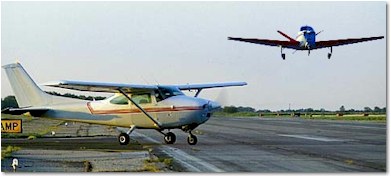 Have you ever been chewed out by ground control or tower for not complying with their instructions? Have you ever used the pilot's four
favorite words, "Was that for us?" At the April 10th meeting Rich Graham will try to keep you out of trouble with ATC with a quick review
of runway incursions. Rich is a member of the FAA FAAST team and will give you some of his flying experiences of "close calls" and what went
wrong in the cockpit.
Have you ever been chewed out by ground control or tower for not complying with their instructions? Have you ever used the pilot's four
favorite words, "Was that for us?" At the April 10th meeting Rich Graham will try to keep you out of trouble with ATC with a quick review
of runway incursions. Rich is a member of the FAA FAAST team and will give you some of his flying experiences of "close calls" and what went
wrong in the cockpit.
|
|
| March 13, 2008 - The Great Circle Air Safari (movie night) |
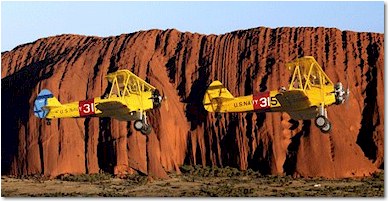 It's time for popcorn and a movie! Experience an exhilarating flight through the vast Australian Outback. Two Americans, Doug Davies
and Rob Richey, shipped their 1942 Stearman biplane all the way to Australia to join up with their Australian mates for a 4,000 mile
flight through one of the most remote and unusual places in the world. Shot in stunning high definition color by Oscar-winning
director of photography, Eric Thiermann, this film portrays a compelling flight of discovery and adventure.
It's time for popcorn and a movie! Experience an exhilarating flight through the vast Australian Outback. Two Americans, Doug Davies
and Rob Richey, shipped their 1942 Stearman biplane all the way to Australia to join up with their Australian mates for a 4,000 mile
flight through one of the most remote and unusual places in the world. Shot in stunning high definition color by Oscar-winning
director of photography, Eric Thiermann, this film portrays a compelling flight of discovery and adventure.
|
|
| February 14, 2008 - Geology Rocks…even from the air! |
 Flying offers us all a wonderful "bird's eye" view of the ground below. Do you ever wonder about the landscape beneath you as you fly?
Are you intrigued by geologic features and wonder how they formed? Why do rivers sometimes flow in straight channels and sometimes
wind madly along their course? Why don't we have mountains here in North Texas? Why are the beaches in Texas so flat while those along
the Pacific Coast have towering cliffs? These questions and more will be answered at the February McKinney EAA meeting. Aileen Duc,
a geologist and pilot (member of Texins Flying Club), will provide a brief synopsis of some geologic features you might see flying
around the local area and further afield. She'll illustrate how these features formed and show examples in photos from her flying trips.
Flying offers us all a wonderful "bird's eye" view of the ground below. Do you ever wonder about the landscape beneath you as you fly?
Are you intrigued by geologic features and wonder how they formed? Why do rivers sometimes flow in straight channels and sometimes
wind madly along their course? Why don't we have mountains here in North Texas? Why are the beaches in Texas so flat while those along
the Pacific Coast have towering cliffs? These questions and more will be answered at the February McKinney EAA meeting. Aileen Duc,
a geologist and pilot (member of Texins Flying Club), will provide a brief synopsis of some geologic features you might see flying
around the local area and further afield. She'll illustrate how these features formed and show examples in photos from her flying trips.
Bio:
Aileen Duc has several degrees in geology from SUNY at Buffalo, Indiana University and University of South Carolina, respectively.
Aileen was introduced to the joy of flying at USC in the late 70's. As a student of coastal geomorphology, Aileen often flew the
coast of South Carolina to make observations of coastal features such a barrier islands, tidal inlets and tidal creeks. Her first
2 flying lessons were through the USC flying club with a fellow geology grad student as instructor. Between those first two lessons
and now, Aileen has raised three kids, worked as a geologist for ARCO, lived in England for 5 years, taught middle school science in
Plano, and is now back in the oil industry as a consulting geology tech. It's taken 27 years for her to get back in the left seat,
but she's enjoyed riding right seat beside her husband during all that time. With the kids grown and her husband Chaz a part-owner
of a Mooney 231, Aileen is enjoying flying now more than ever.
|
|
| January 17, 2008 - In-Flight Emergencies: Upset Recovery |
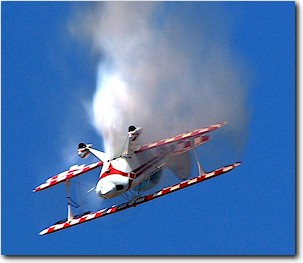 Making the most of a bad attitude
How many times have you accidentally been upside down? Never, for most of you. It is difficult to believe it could ever happen to you.
But a little ice on the wings, a lot of wake turbulence from an airliner, winds tumbling across mountain ranges, an autopilot gone
berserk-any of these could cause an unwelcome attitude.
Spins get their fair share of publicity, but this presentation is primarily about extreme attitudes not involving spins. On your back
and headed down, for example. Extreme attitudes are ones involving more than 25 degrees of pitch up, or 10 degrees of pitch down, or
more than 45 degrees of bank. For the inexperienced, the most confusing aspect of an extreme unusual attitude may involve heavier G-forces.
Instinctively, most pilots thrown on their back begin to pull on the elevator to keep the aircraft from going down. In a perfect world,
pulling back equals up. But if the aircraft is already upside down, then it is easy to understand, sitting as you are in the comfort
of your living room, that pulling plunges the aircraft towards the ground in a split-S maneuver. Pulling is also a mistake if the
aircraft is not upside down, but in a steep bank; it leads to an accelerated stall.
Dave Honaker, owner of Four Winds Aviation will describe what is involved in learning how to recover from unusual attitudes in your
airplane. His company, Four Winds Aviation, located at Aero Country, McKinney, Texas, uses an aerobatic Super Decathlon and a Pitts
S2B to provide a wide range of training to pilots wishing to learn more about upset recovery, as well as tailwheel instruction and
aerobatics. Check out their website at: Tail-wheel.com. Dave is also a simulator
instructor at CAE SimuFlite, DFW airport.
|
|
| November 8, 2007 - What is Involved in an EAA Fly-in? |
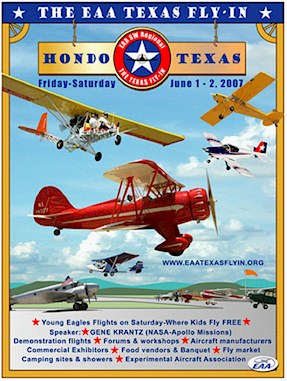 Ever wondered what it takes to put on a first-class EAA fly-in? Now you can find out. Norris Warner, a lifetime pilot, aircraft
homebuilder, and principal organizer of the fly-in, will present information on the EAA SW Regional, known as "The EAA Texas Fly-In."
The stated mission of SWRFI is to bring together present and future EAA members to experience the "Love of Aviation" that we share
and to learn more about aircraft building, restoring, flying, and safety issues; to inspire the next generation of aviation; and to
encourage the fellowship that is unique to our organization.
Ever wondered what it takes to put on a first-class EAA fly-in? Now you can find out. Norris Warner, a lifetime pilot, aircraft
homebuilder, and principal organizer of the fly-in, will present information on the EAA SW Regional, known as "The EAA Texas Fly-In."
The stated mission of SWRFI is to bring together present and future EAA members to experience the "Love of Aviation" that we share
and to learn more about aircraft building, restoring, flying, and safety issues; to inspire the next generation of aviation; and to
encourage the fellowship that is unique to our organization.
You will learn about the work and coordination that goes into creating a successful EAA fly-in, much of which you can use for your
local chapter fly-in. Also, you may discover opportunities to participate in an important EAA event attended by pilots and aviation
enthusiasts from all over the United States. SWRFI is like Oshkosh in our own backyard - don't miss an opportunity to learn more
about it and possibly get in on the action.
|
|
| October 11, 2007 - Flying the Seaplane |
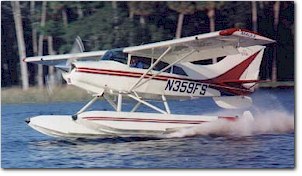 This month's program will feature Dr. Herb Hagler, Professor of Pathology at UT Southwestern Medical Center of Dallas, TX. Herb will
give a talk on Seaplanes, particularly float planes. Topics include: Requirements for the rating, PTS standards, Characteristics of the
various types Hydrodynamics, Aerodynamics, Landing Regulations for Texas, Amphibious vs. Straight Floats - Pros and Cons, and Frequently
Asked Questions. What is the right float plane for you? Should I get a fixed fee or hourly SES rating? Where can I Land, Dock and Ramp? Are
there any good places to eat?
This month's program will feature Dr. Herb Hagler, Professor of Pathology at UT Southwestern Medical Center of Dallas, TX. Herb will
give a talk on Seaplanes, particularly float planes. Topics include: Requirements for the rating, PTS standards, Characteristics of the
various types Hydrodynamics, Aerodynamics, Landing Regulations for Texas, Amphibious vs. Straight Floats - Pros and Cons, and Frequently
Asked Questions. What is the right float plane for you? Should I get a fixed fee or hourly SES rating? Where can I Land, Dock and Ramp? Are
there any good places to eat?Herb has been a Pilot for 37 years, Commercial Instrument SEL and SES, CFI and CFII since 2006. 2000+ hours
total time, 400+ on Floats.
|
|
| September 13, 2007 - Corkey Fornof presents the LoPresti Fury |
 Speed Merchant Roy LoPresti patterned the Fury design after the timeless Globe Swift, but made it much better and faster. His dream has
now come to life and this Ferrari of the skies is ready for production. The LoPresti
organization has asked Corkey Fornof to be its
chief pilot for the new airplane and to show it off at every possible airshow and aviation event.
Speed Merchant Roy LoPresti patterned the Fury design after the timeless Globe Swift, but made it much better and faster. His dream has
now come to life and this Ferrari of the skies is ready for production. The LoPresti
organization has asked Corkey Fornof to be its
chief pilot for the new airplane and to show it off at every possible airshow and aviation event.
Corkey has agreed to make a presentation on the LoPresti Fury at our September meeting, which should be fascinating. As you may know,
Corkey is famous in his own right. He has more than 15,000 hours in over 287 different types of aircraft. He has been around the world
in major airshows and as a test pilot and corporate pilot. More interestingly, Corkey has been involved flying as the stunt pilot in
numerous Hollywood movies, which he talked about at our May 2005 meeting. Corkey has filmed all over the United States, Mexico,
New Zealand, Australia, Costa Rica, Argentina and Thailand.
|
|
| August 9, 2007 - Frontiers of Flight Museum |
 Dan Hamilton is the Executive Director of the Frontiers of Flight Museum
at Love Field, Dallas, Texas. He will
tell us about the recently expanded museum, which now contains several interesting aircraft, as well as historical documents.
Dan Hamilton is the Executive Director of the Frontiers of Flight Museum
at Love Field, Dallas, Texas. He will
tell us about the recently expanded museum, which now contains several interesting aircraft, as well as historical documents.
The Frontiers of Flight Museum was founded in November 1988, by Kay Bailey Hutchison, Jan Collmer, and William E. Cooper.
Their initial intent was to exhibit at Dallas Love Field the priceless artifacts, documents and photographs of the
History of Aviation Collection donated to The University of Texas at Dallas by the legendary aviation historian
George E. Haddaway. Since then, the Museum has added extensive artifacts dealing with the history of aviation from
earliest days through today's modern military, commercial, and aerospace vehicles.
|
|
| July 12, 2007 - Collision Avoidance |
 Jason Clemens, CEO of Zaon Flight Systems, Inc.
will speak about aircraft collision avoidance products and technologies.
Jason Clemens, CEO of Zaon Flight Systems, Inc.
will speak about aircraft collision avoidance products and technologies.
PCAS, which stands for Portable Collision Avoidance System, is a trademark of Zaon Flight Systems for technology similar
in function to TCAS (Traffic and Collision Avoidance System). TCAS is the industry standard for commercial collision
avoidance systems. The original PCAS technology was developed in 1999. Now, the MRX/XRX line of collision avoidance systems
incorporates the fourth generation of PCAS technology. Through this technology, transponder-equipped aircraft are detected
and ranged, and the altitude is decoded. PCAS G4 technology has advanced to the point that highly accurate range, relative
altitude, and quadrant direction can be accurately detected in a portable, all-in-one cockpit device.
|
|
| June 14th 2007 - Challenge Air for Kids and Friends |
 Our June 14th meeting will feature a presentation given by Byron Laszlo, Executive Director of Challenge Air.
Challenge Air for Kids and Friends, a not-for-profit organization, offers motivational,
inspirational and life-changing experiences to physically challenged children and youth through aviation.
Our June 14th meeting will feature a presentation given by Byron Laszlo, Executive Director of Challenge Air.
Challenge Air for Kids and Friends, a not-for-profit organization, offers motivational,
inspirational and life-changing experiences to physically challenged children and youth through aviation.
Rick Amber, the founder, established Challenge Air with the belief that, "every disabled person should see the world from a
different view… out of their wheelchairs and crutches and from the sky." This belief of Amber's came from his life experiences.
As a fighter pilot and training officer in the US Navy from 1967 to 1971, Amber lost the use of his legs when his jet crashed
during a landing attempt on the aircraft carrier USS Hancock. He was returning from his 109th combat mission over Vietnam,
in high seas, when the ship's landing system failed. He was twenty-six years old.
|
|
| May 10th 2007 - Three…Two...One…BLAST-OFF!!! |
 Our May 10th meeting will feature a presentation on Amateur Rocketry by Jack and Suzy Sprague. Jack and Suzy have been flying
model rockets at least as long as they have been married - and even a while beforehand in Jack's case. They are supporting
members of the local rocket club, the Dallas Area Rocket Society, and of the national organizations that support rocketry in
the US; the National Association of Rocketry, and the Tripoli Rocket Association.
Our May 10th meeting will feature a presentation on Amateur Rocketry by Jack and Suzy Sprague. Jack and Suzy have been flying
model rockets at least as long as they have been married - and even a while beforehand in Jack's case. They are supporting
members of the local rocket club, the Dallas Area Rocket Society, and of the national organizations that support rocketry in
the US; the National Association of Rocketry, and the Tripoli Rocket Association.
Their presentation will explain the types of rockets, the levels of amateur rocketry, and the support available to the
public for these activities through the DARS and the NAR. Hobby rocketry ranges from the model size available at hobby
stores, through high-power and amateur levels all the way up to experimental. Some examples of these types of rockets
will be available for display and discussion.
The DARS supports several kinds of activities associated with rockets and rocketry. They hold a regular schedule of
launches for both model and high-power rockets. DARS is also very active with outreach to the schools, scouts and
youth groups in our area. You can learn more by visiting the DARS
website at: www.DARS.org
|
|
| April 12th 2007 - Airplanes, Old and New |
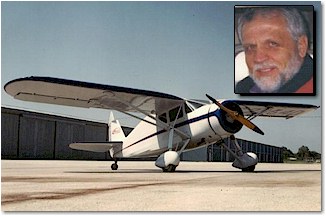 Experience the magic of bringing a classic airplane back to life; explore the mysteries of constructing a cutting-edge
experimental; and see the future of aviation through the new Light Sport Aircraft category.
Experience the magic of bringing a classic airplane back to life; explore the mysteries of constructing a cutting-edge
experimental; and see the future of aviation through the new Light Sport Aircraft category.
The presentation for this April will be from Mr. Mike Huffman, the owner of Sport Aviation Specialties, a Missouri
based company that does a number of things related to experimental aircraft. The reason Mike is available to meet
with us is because, on the weekend of April 14-15, he will be in the area conducting one of many seminars that his
company is holding around the country to train and qualify owners of Experimental Light Sport Aircraft (airplane
class) ("E-LSA") to obtain the FAA issued Repairman - Light Sport Inspection Rating, which allows them to perform
the annual condition inspection on their own E-LSAs.
Mike is a Designated Airworthiness Representative ("DAR") and one of the few who specializes in certifying Experimental
Light Sport Aircraft. He can explain what is involved in getting an E-LSA certified and in keeping it airworthy. Mike
has also been involved in building, modifying, and/or restoring a wide range of experimental and production aircraft
for the past 35 years and has a fascinating presentation involving approximately fifteen aircraft projects on which he
has worked, many of which have won awards at Oshkosh. You can look forward to an entertaining and informative evening
by someone who shares a love for flying and building/restoring experimental aircraft. Mike has shared his knowledge
and experience at numerous other EAA chapters and aviation gatherings. We are honored to have him visit with us at
our next EAA Chapter 1246 meeting on April 12, 2007.
You can view the Sport Aviation Specialties website at: SportAviationSpecialties.com.
|
|
| March 8th 2007 - Close Encounters of the Military Kind |
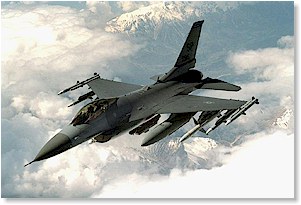 It's a beautiful day (in the neighborhood) and you are on a cross-country VFR flight in your favorite personal aircraft.
Your path takes you across a Military Operations Area ("MOA"), which you have successfully navigated dozens of
times. Soon after you enter the MOA, you see a speck on your windshield (or is that an aiplane?). You are on a head-on
collision course with an F-16 military jet fighter that is busy with a training mission and does not spot you. Your
combined speeds result in a closure rate of more than 800 miles per hour! You only have seconds to react. Can
you spell D-I-S-A-S-T-E-R? What do you do? Better yet, what should you have done?
It's a beautiful day (in the neighborhood) and you are on a cross-country VFR flight in your favorite personal aircraft.
Your path takes you across a Military Operations Area ("MOA"), which you have successfully navigated dozens of
times. Soon after you enter the MOA, you see a speck on your windshield (or is that an aiplane?). You are on a head-on
collision course with an F-16 military jet fighter that is busy with a training mission and does not spot you. Your
combined speeds result in a closure rate of more than 800 miles per hour! You only have seconds to react. Can
you spell D-I-S-A-S-T-E-R? What do you do? Better yet, what should you have done?The program for our March 8
Chapter meeting is presented Mr. Paul Bailey, the airspace manager for the 301st Fighter Wing at Carswell Air
Force Base in Fort Worth, Texas. He will explain what you need to know before entering and while flying
through a MOA or crossing a Military Training Route ("MTR"). After attending this presentation, you should be
more capable of avoiding a mid-air collision with military aircraft that may be maneuvering along your intended
flight path, day or night. Since, in many situations, you have to share airspace with these extraordinarily
fast military aircraft, you should know as much as possible about how to fly safely in such situations.
You are invited to an informative presentation that can make you a smarter pilot.
|
|
| February 8th 2007 - Your Aircraft Project, Plans, and Manuals |
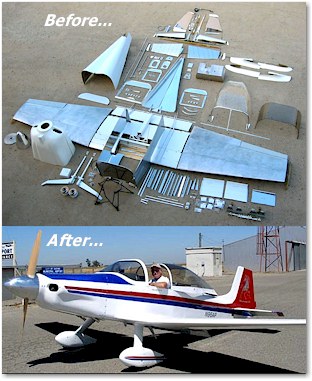 At the February Chapter meeting, you are requested to bring pictures, plans, manuals, and any other items that provide
information about the aircraft project(s) that you have built or worked on, whether they are finished or not. We will provide
space for you to lay out and arrange your display, so that all of us can see what is involved in such a project.
You should be proud of your work, and the rest of us are curious about what you have done. This meeting is about sharing
information. We want to see the many wonderful kitplanes and restoration projects that our members have spent
countless hours on. Everyone will have an opportunity to visit each table and ask questions, learn more about a project
that interests them, and find out what you have been doing with your aviation life.
At the February Chapter meeting, you are requested to bring pictures, plans, manuals, and any other items that provide
information about the aircraft project(s) that you have built or worked on, whether they are finished or not. We will provide
space for you to lay out and arrange your display, so that all of us can see what is involved in such a project.
You should be proud of your work, and the rest of us are curious about what you have done. This meeting is about sharing
information. We want to see the many wonderful kitplanes and restoration projects that our members have spent
countless hours on. Everyone will have an opportunity to visit each table and ask questions, learn more about a project
that interests them, and find out what you have been doing with your aviation life.
Some members want to start their own project, or compare notes, and this will be an opportunity for them to see what is
involved, before they take the next step. Several of us have already committed to bringing information about their labor
of love, and even if you were not at the January meeting, you are invited (no, requested) to do the same.
|
|
|
|